
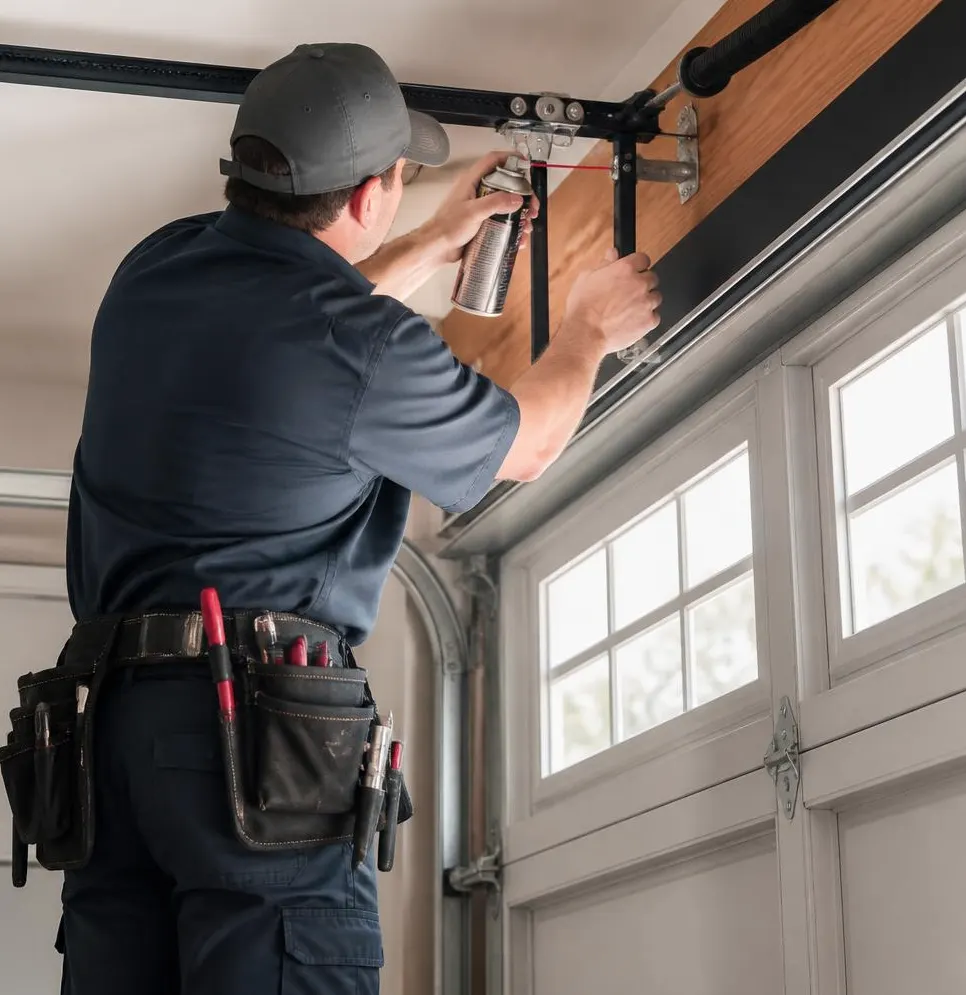
What a Typical Noise Call Looks Like
On a service call for a noisy door, the first thing a technician does is stand in the garage and run the door up and down a few times, just listening. The sound itself narrows things down fast. A door that grinds on the way up points somewhere different than one that pops once and goes quiet, or one that rattles the whole time it's moving. Before any panel comes off or any tool gets picked up, the noise tells most of the story. Here's how to read it, broken down by the four sounds homeowners call about most, in the order a technician would actually check for causes.
Grinding
Grinding is a metal-on-metal sound, usually loudest as the door passes the point where it's closest to the opener. It almost always means something is rubbing or wearing where it shouldn't.
- Rollers first. Steel rollers with worn-out bearings or cracked nylon rollers are the most common cause. A technician checks the rollers for flat spots, cracking, or play in the stem before anything else, since this is the cheapest and most frequent fix. Replacing a full set of rollers usually runs in the $100-$250 range depending on roller type.
- Track alignment second. If the rollers look fine, the track gets checked for bends or gaps where brackets have pulled loose. A bent track grinds against the roller edge every time the door passes that spot. This gets corrected by realigning or replacing the damaged section.
- Opener drive gear last. On chain and belt openers, the internal drive gear is often made of nylon and wears down over years of use, eventually grinding against the opener's housing. This requires opening the opener unit and replacing the gear kit.
Squealing
Squealing is a higher-pitched sound, usually tied to something moving without enough lubrication.
- Lubrication first. Dry hinges, rollers, and springs are the number one cause, and it's the first thing checked because it's the easiest to confirm and the cheapest to fix. A proper garage door lubricant on hinges, roller stems, and spring coils usually quiets things down within a day.
- Roller bearings second. If lubrication doesn't fix it, the roller bearings themselves may be worn out rather than just dry, which means replacement rather than oil.
- Spring end bearings third. On torsion spring systems, the bearings at either end of the spring shaft can wear down and start squealing under load. This is checked by hand, feeling for roughness as the shaft turns, and fixed by replacing the bearing plates.
Popping
Popping is usually a single sharp noise rather than a continuous one, and it tends to worry homeowners more than it should, or less than it should, depending on the cause.
- Springs first. A cracked or separating torsion spring is checked first, since this is the cause that actually matters for safety. A technician looks for a visible gap in the coil or a spring that's come apart at one end.
- Hinges and bolts second. Loose hinge bolts or hardware that's worked itself free from the door's repeated flexing can pop audibly as the panel shifts. Tightening or replacing hardware usually resolves this.
- Wall brackets third. In this area, the swing between humid summers and cold, icy winters causes wood framing and metal brackets to expand and contract. Brackets anchoring the track to the wall can loosen over a season, producing a pop each time the door cycles. These get re-secured or replaced if the mounting point has worn out.
Rattling
Rattling is a looser, more constant sound that runs through the whole open-and-close cycle rather than happening at one point.
- Hardware first. Loose bolts at the hinges, track brackets, or opener rail are checked first, since vibration from regular use works fasteners loose over time. A full hardware tightening pass often solves this on its own.
- Opener chain or belt second. A chain drive opener with too much slack will rattle against the rail as it runs. This is fixed by adjusting chain tension at the opener unit.
- Weatherstripping last. Worn or loose weatherstripping along the bottom or sides of the door can flap in wind, which shows up as a rattle, especially during the gusty stretches of spring storm season or on windy winter days.
When to Call Willoughby Hills Garage Door
If lubrication and tightening a few bolts doesn't quiet the door down, or if the noise is a pop you suspect is coming from the spring, that's the point to call in a technician rather than keep testing it yourself. A cracked torsion spring under tension is a genuine safety issue, not just a noise problem. Willoughby Hills Garage Door handles spring replacement with the right tools and tension setup for your door's weight, and offers garage door maintenance visits that catch worn rollers, loose hardware, and dry hinges before they turn into grinding or popping down the road. Going into another Ohio winter with ice, salt, and big temperature swings, a maintenance check now is a lot cheaper than an emergency spring repair in January.
If your garage door is making noise it didn't make last year, give Willoughby Hills Garage Door a call. We serve Willoughby Hills and the surrounding area, and we'll tell you straight what's causing it and what it takes to fix.