
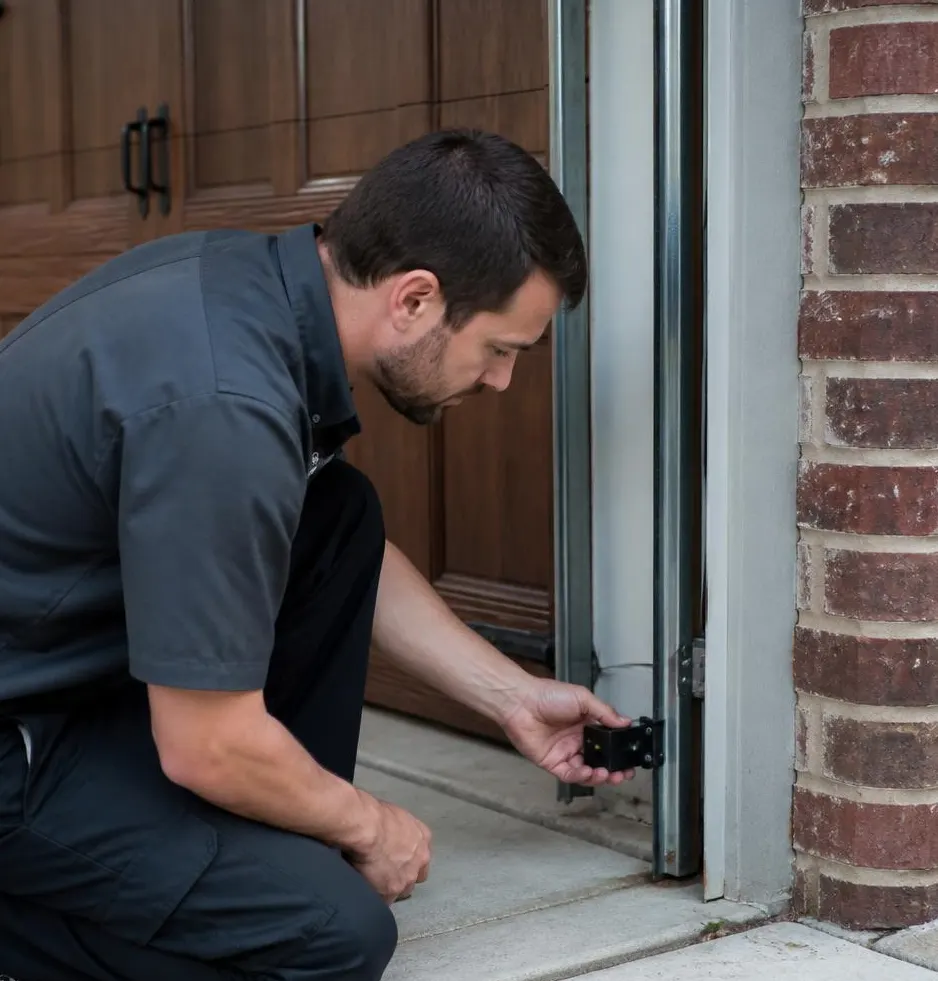
What a Technician Usually Finds on These Calls
A typical call in this area starts the same way: the door was working fine, then one morning it felt heavier than usual, made a loud bang, or just stopped moving halfway up. By the time the technician gets there, the spring has usually already failed. What's frustrating is that in most cases, the warning signs were visible for weeks or months before the break. Cold winters, road salt tracked into the garage, and the big temperature swings common to this part of Ohio all accelerate spring fatigue and corrosion. Checking your springs a couple times a year, especially as the weather turns, can catch a problem while it's still a simple fix instead of an emergency.
Torsion Spring Checklist (the spring mounted horizontally above the door)
1. Look for a visible gap in the coils
Torsion springs sit coiled tightly along a metal shaft above the door. Over time, metal fatigue causes the coils to separate slightly or develop an uneven gap in one spot. A visible gap or kink means the spring has already stretched past where it should be and is close to failing. Do not attempt to adjust or remove it yourself; torsion springs are under high tension and can cause serious injury.
2. Check for rust and flaking on the coils
Humid summers and salty winter air moving through an open garage door both contribute to rust forming on the coil surface. Surface rust alone isn't an emergency, but rust that's eating into the metal (you'll see pitting or flaking, not just discoloration) weakens the coil and shortens its remaining life significantly.
3. Run the manual balance test
With the opener disconnected (pull the red release cord), lift the door by hand to about waist height and let go. A healthy door stays put. A door that drifts down or shoots up means the torsion spring has lost tension and is compensating poorly. This is one of the most reliable tests because it shows actual spring performance, not just appearance.
4. Listen during operation
A loud pop when the door moves, a grinding sound from the spring shaft, or a rhythmic squeak with each rotation all point to friction or metal fatigue in the torsion spring assembly. Normal operation should be smooth and fairly quiet.
Extension Spring Checklist (the springs running along the horizontal tracks)
5. Check coil spacing along the spring's length
Extension springs should have even spacing between coils when the door is closed. If one section looks stretched further apart than the rest, that section has lost elasticity and is a likely failure point.
6. Inspect for fraying, kinks, or stretched loops
The hook ends and the small loops that attach to the pulley system take a lot of repeated stress. Look for any loop that's been pulled open, bent, or shows metal fatigue cracks. A stretched or deformed hook end usually means replacement is close.
7. Confirm safety cables are present and intact
Extension springs should always have a cable running through the center of the coil. This isn't a wear indicator by itself, but if it's missing, frayed, or was never installed, a spring failure becomes far more dangerous since the spring has nothing to stop it from launching when it breaks.
8. Watch how the opener handles the door
If the opener strains, the door moves in jerks instead of a smooth glide, or it takes noticeably longer to open than it used to, the springs are likely no longer carrying their share of the door's weight, forcing the opener motor to compensate.
How Age and Season Factor In
Most residential springs are rated for a number of open-close cycles rather than a calendar age, but homes here see extra stress from ice buildup on tracks in winter and humidity swelling wood-paneled doors in summer. If your springs are original to a home built more than seven or eight years ago and you haven't had them inspected, it's worth putting on the checklist before winter sets in.
When to Call Willoughby Hills Garage Door
If you spot a gap in the coils, a door that won't hold its balance, or fraying on an extension spring, stop using the opener and call us before the spring fails completely. We offer full Spring Replacement using springs matched to your door's weight and cycle needs, and our Garage Door Maintenance visits include a hands-on spring and hardware inspection so these issues get caught early instead of during a Sunday morning emergency. We serve Willoughby Hills, Willoughby, Wickliffe, Mentor, Kirtland, Eastlake, Mayfield Heights, and Highland Heights.
If any of these checklist items sound familiar, call Willoughby Hills Garage Door today for a straightforward inspection and an honest answer about what your springs actually need.